MFDC resistance welding
MFDC resistance welding machines: medium-frequency DC welding technology
Spot, projection and seam welding machines with an inverter controller, designed and built by Asim Electronic for your part and production line.
- Designed and built in Iran
- Installation and operator training
- Warranty and after-sales service
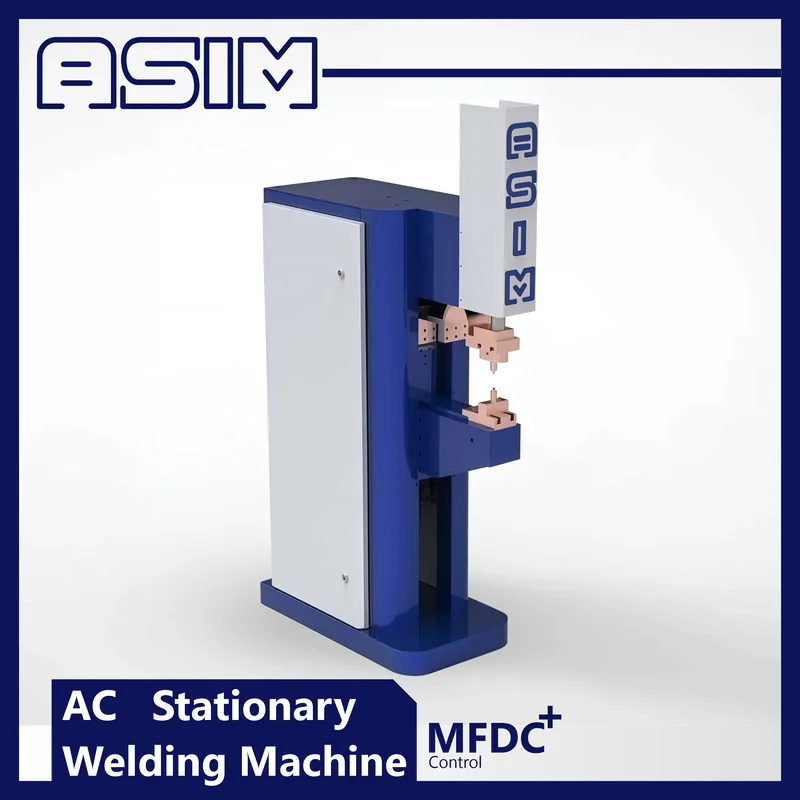
What is an MFDC resistance welding machine?
An MFDC (medium-frequency direct current) resistance welding machine uses an inverter to supply and control the welding current. Instead of feeding the transformer directly from the mains, the inverter drives it at medium frequency and the output is rectified to direct current. This gives finer control of the welding current and a more stable heat input into the joint, in spot welding as well as projection welding.
Choosing a machine starts with the part: material and thickness, joint type, electrode force, required current, production rate and working conditions all matter. Getting them right leads to stable joints and fewer welding defects.
Asim Electronic designs and builds resistance welding equipment and its controllers. Our engineers review your part and process and propose the configuration that fits your application.
How it works
From the mains to a controlled weld
Rectifier
The incoming mains supply is rectified to DC.
Medium-frequency inverter
The inverter switches the DC at medium frequency under the controller's command.
Welding transformer
A compact medium-frequency transformer delivers the high welding current.
Output rectifier
The secondary is rectified, so a steady direct current flows through the electrodes.
The controller sets current, weld time and electrode force for every part; together they decide the size and strength of the weld nugget.
Applications
Where MFDC welding is used
Spot welding
Joining overlapping sheets in body parts, cabinets and enclosures.
Projection welding
Welding nuts, bolts and pressed projections onto sheet parts.
Seam welding
Continuous seams with roller electrodes on suitable machine configurations.
Automotive parts
Body-in-white and component lines that need repeatable welds.
Home appliances
Sheet-metal housings and frames in series production.
Coated and stainless sheets
Parts where a steady heat input and a clean surface matter.
Comparison
Difference between AC and MFDC resistance welding
| Criterion | AC resistance welding | MFDC resistance welding |
|---|---|---|
| Welding current | Alternating, at mains frequency | Direct, rectified from the inverter output |
| Transformer frequency | Mains frequency | Medium frequency |
| Transformer size and weight | Usually larger for the same power | Can be smaller and lighter |
| Current control | Depends on the controller and machine design | Fast and fine control through the inverter |
| Typical use | Many common applications | Precision applications and advanced production lines |
| Final choice | Based on process and cost | Based on process, required control and total cost |
MFDC is not automatically the best or most economical option for every job; the result depends on the machine design, the part, the duty cycle and the required joint quality.
Machines and controllers
Asim resistance welding machines
MFDC resistance welding machine
Pedestal and bench machines for spot and seam welding with an inverter controller, in several power ratings.
View machine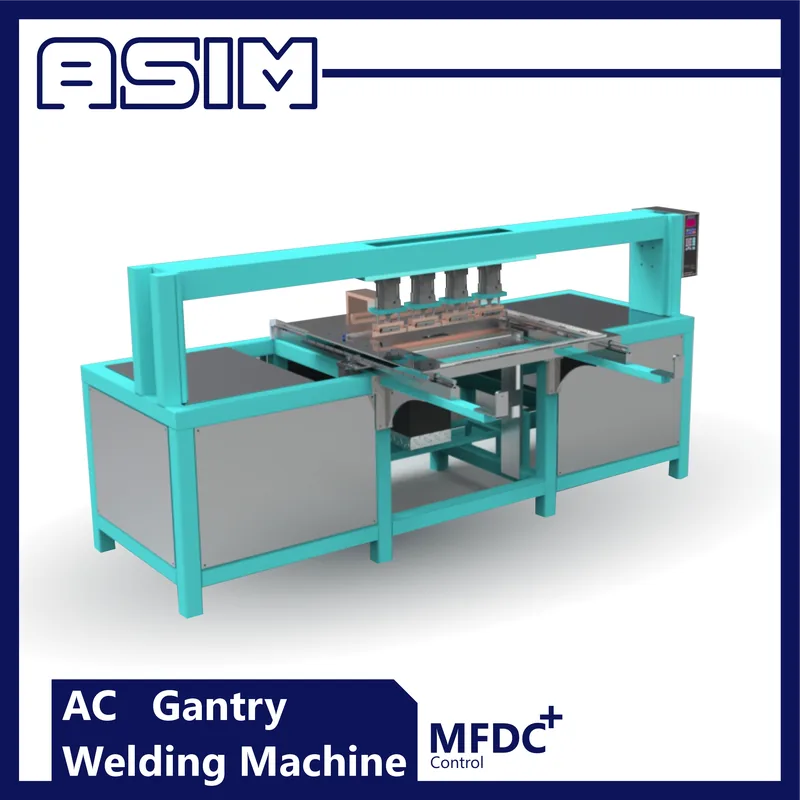
AC resistance welding machine
The AC range for common spot and seam welding jobs, for comparison with the MFDC machines.
View machine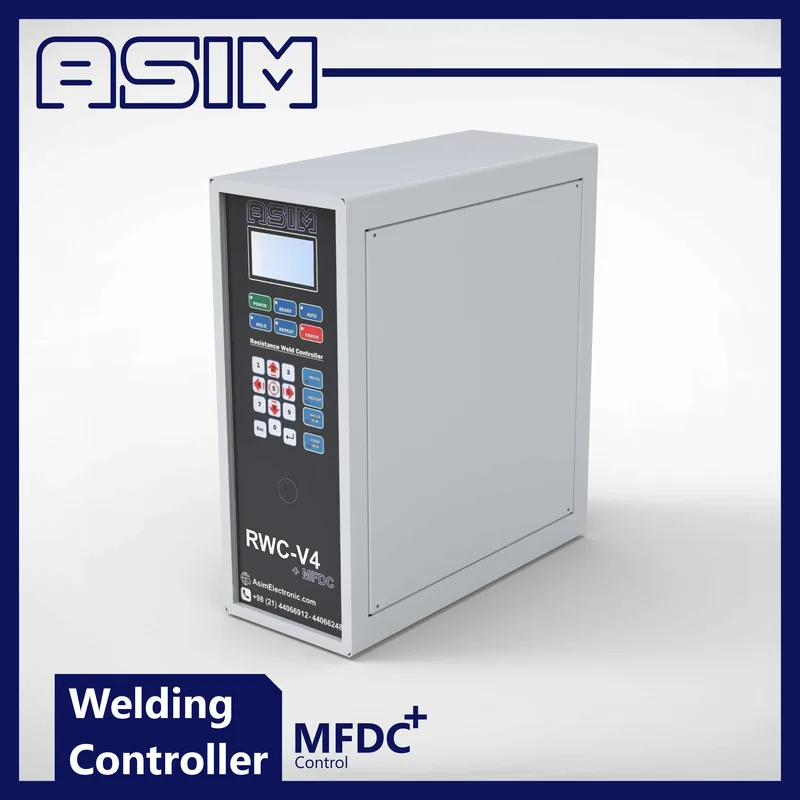
MFDC welding controller
Inverter controller for spot and press welding machines, with independent weld programs for each part.
View controller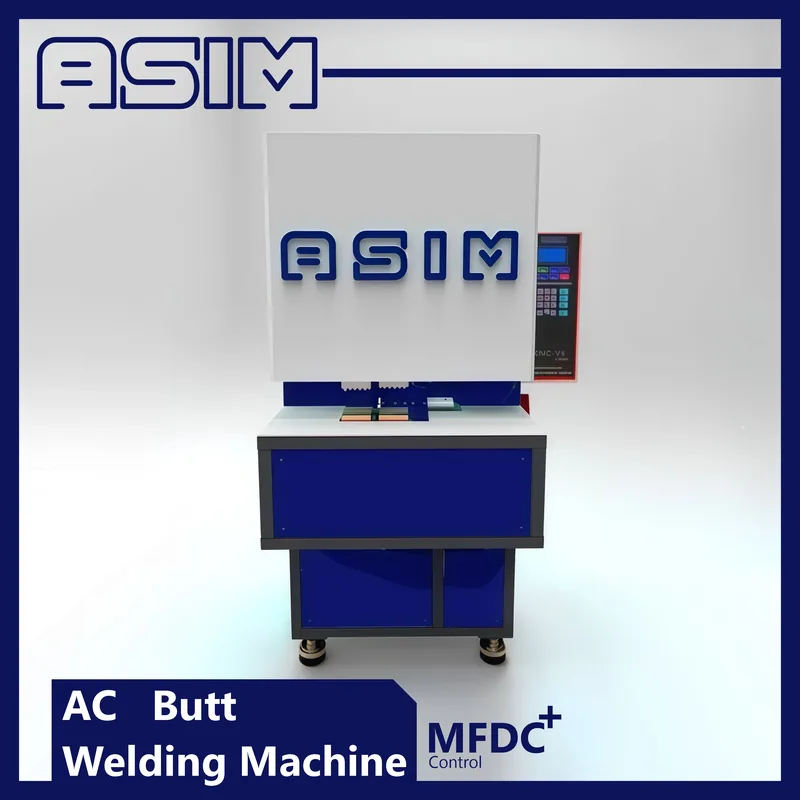
Butt and gantry machines
Butt welding of shafts and sections, and gantry machines for large parts, built to order.
Request a quoteController
What the Asim controller does
- Squeeze, weld and hold times with a simple operator interface
- Pre-heat, post-heat and upslope/downslope
- Constant-current and constant-voltage modes
- A separate weld program (recipe) for each part
- Monitoring of current and voltage with alarms
- Start by pedal, safe two-hand button or PLC signal
- Cycle counter and operator access lock
- Water cooling of electrodes and transformer
Choosing the right machine
Send us these details and our engineers will propose the machine type, power and fixtures for your part:
- Material and thickness of the sheets or parts
- Joint type: spot, projection, seam or butt
- Part size and a drawing or photo
- Number of welds per minute or per shift
- Fixture and automation needs
FAQ
Frequently asked questions about MFDC welding machines
What is an MFDC resistance welding machine?
It is a resistance welding machine that uses a medium-frequency inverter to supply and control direct welding current. The controller regulates current, weld time and electrode force for each part.
What is the difference between MFDC and AC welding machines?
An AC machine works at mains frequency with alternating current. In an MFDC machine the inverter drives the transformer at medium frequency and the output is rectified to direct current, which allows a smaller transformer and faster, finer current control. The right choice depends on the part, the process and the budget.
Is MFDC suitable for welding aluminium?
Suitability depends on the alloy, thickness, joint design and required quality. Send us the part specifications and our engineers will tell you whether an MFDC configuration fits and which settings it needs.
What information is needed to choose the machine power?
Material and thickness of the sheets, joint type (spot, projection or seam), part size, number of welds per minute and the required quality level. With these, the right power, transformer and electrode force can be selected.
Can Asim build a custom resistance welding machine?
Machines are configured for the part and the production line: type of machine, power, fixtures and the level of automation are chosen together with the customer. Contact our engineers to discuss your project.
What does the price of an MFDC welding machine depend on?
Mainly on the power, machine type (pedestal, bench, butt or gantry), controller options, fixtures and automation. Prices are given after a short technical review of your part.
Need an MFDC welding machine for your line?
Tell us about your part and production volume; we recommend the right configuration and send a quotation.